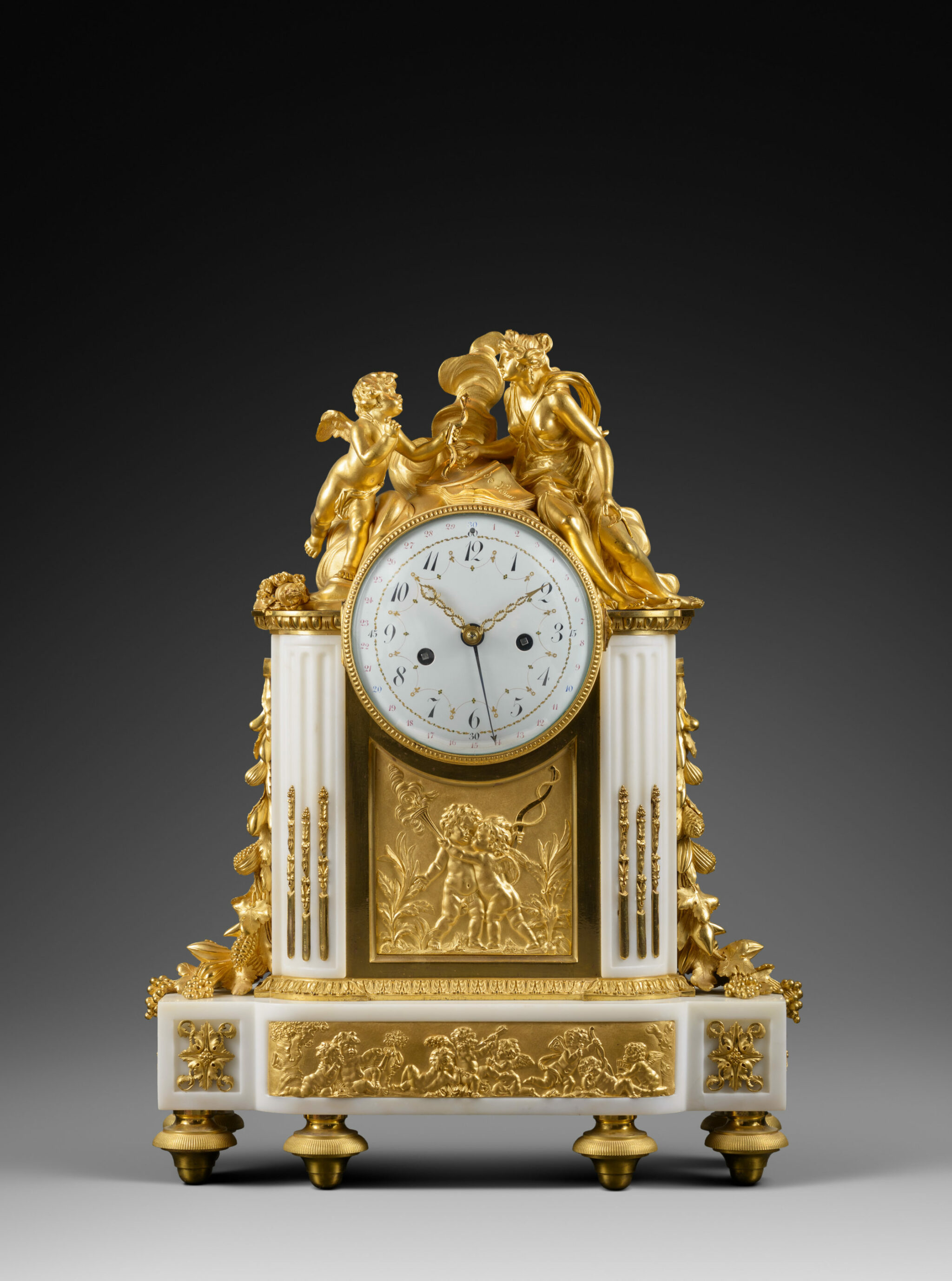
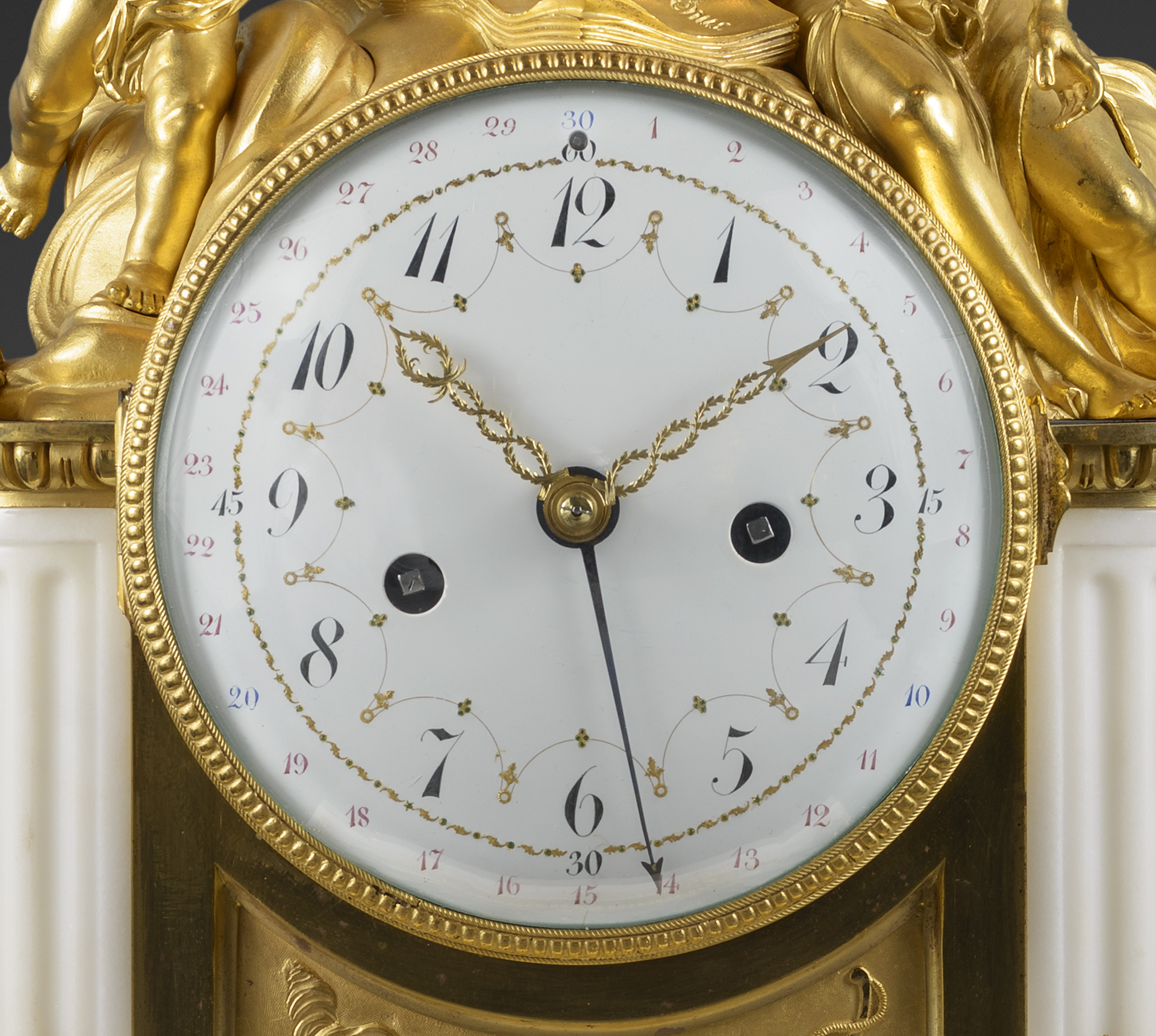
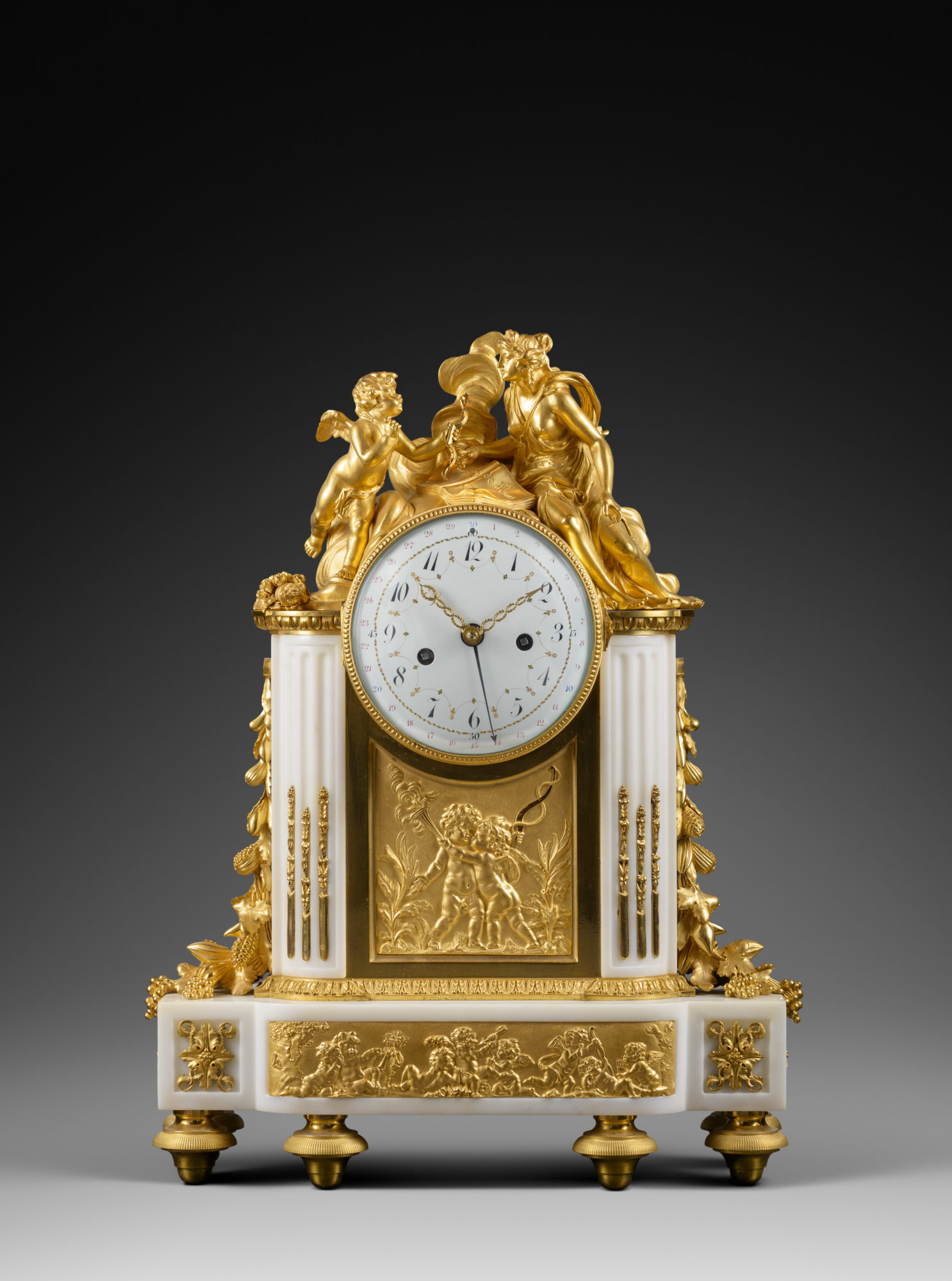
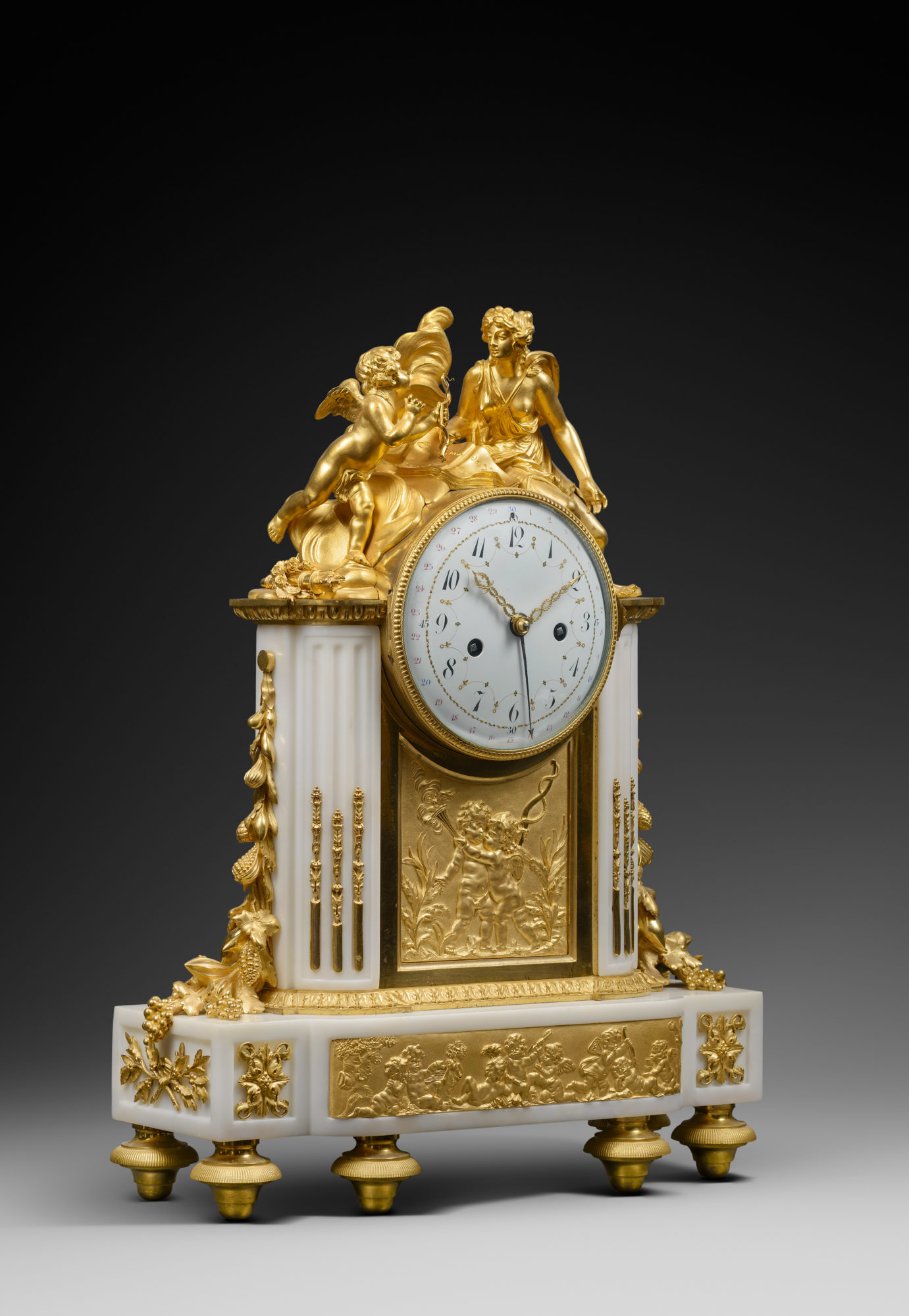
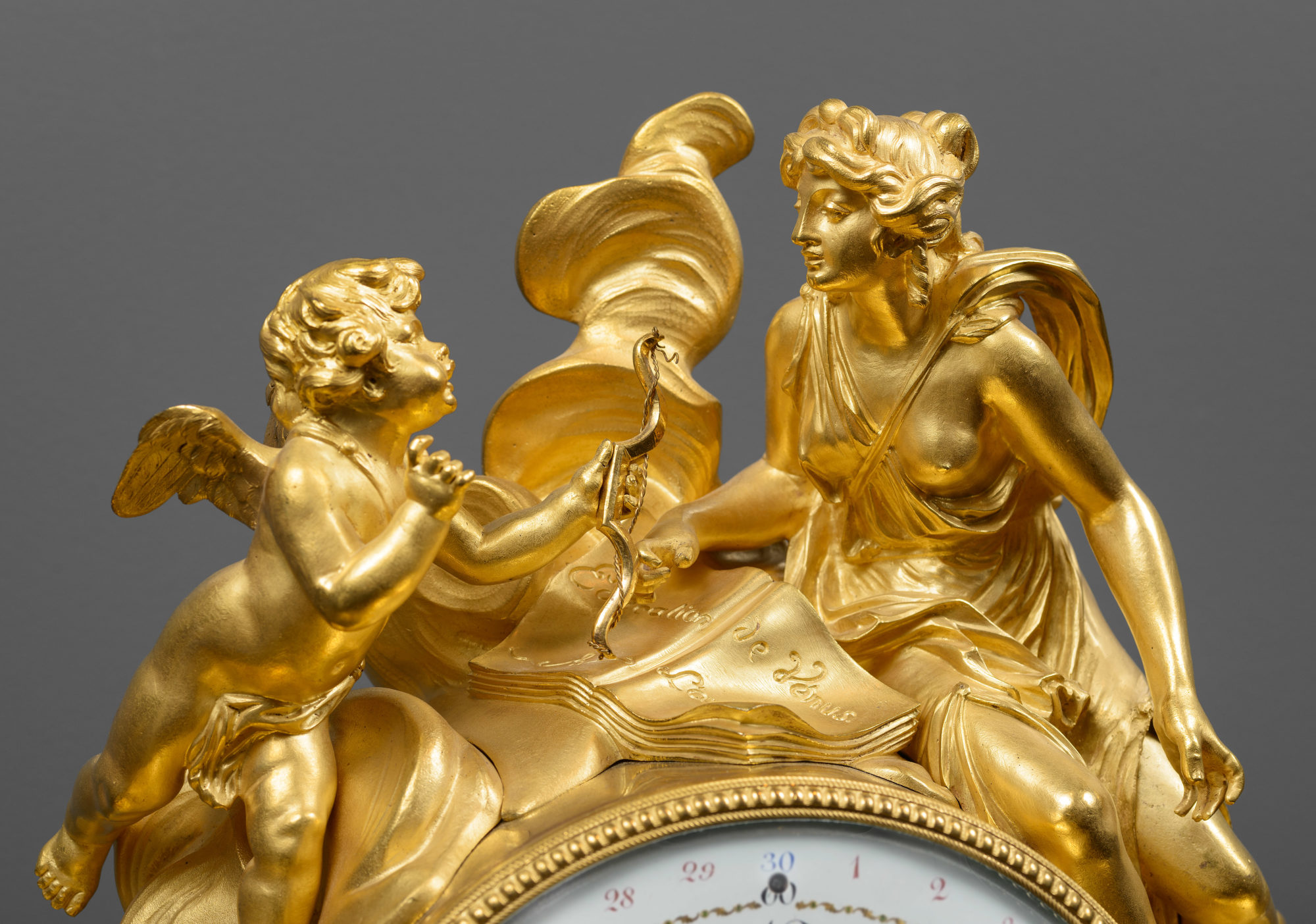
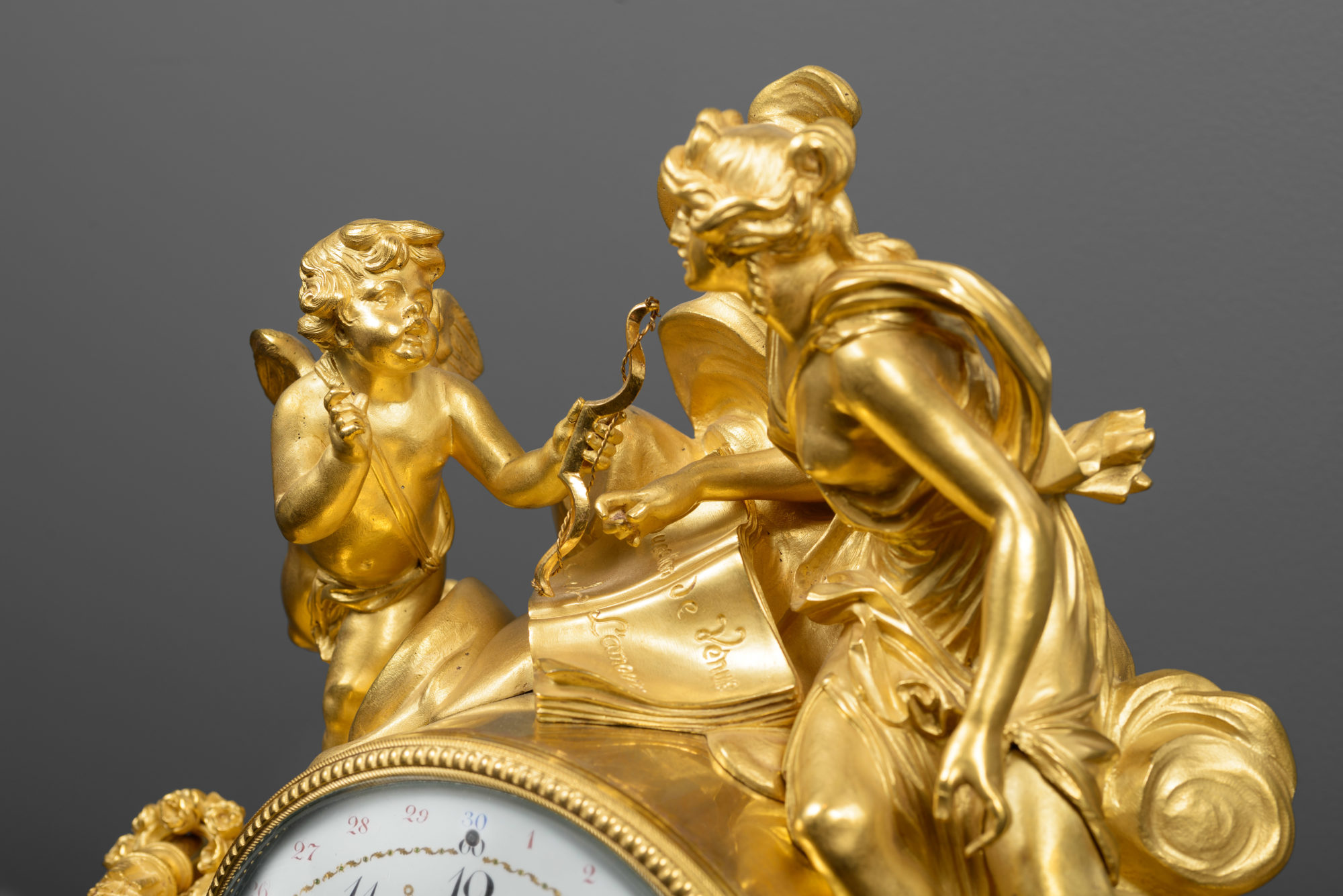
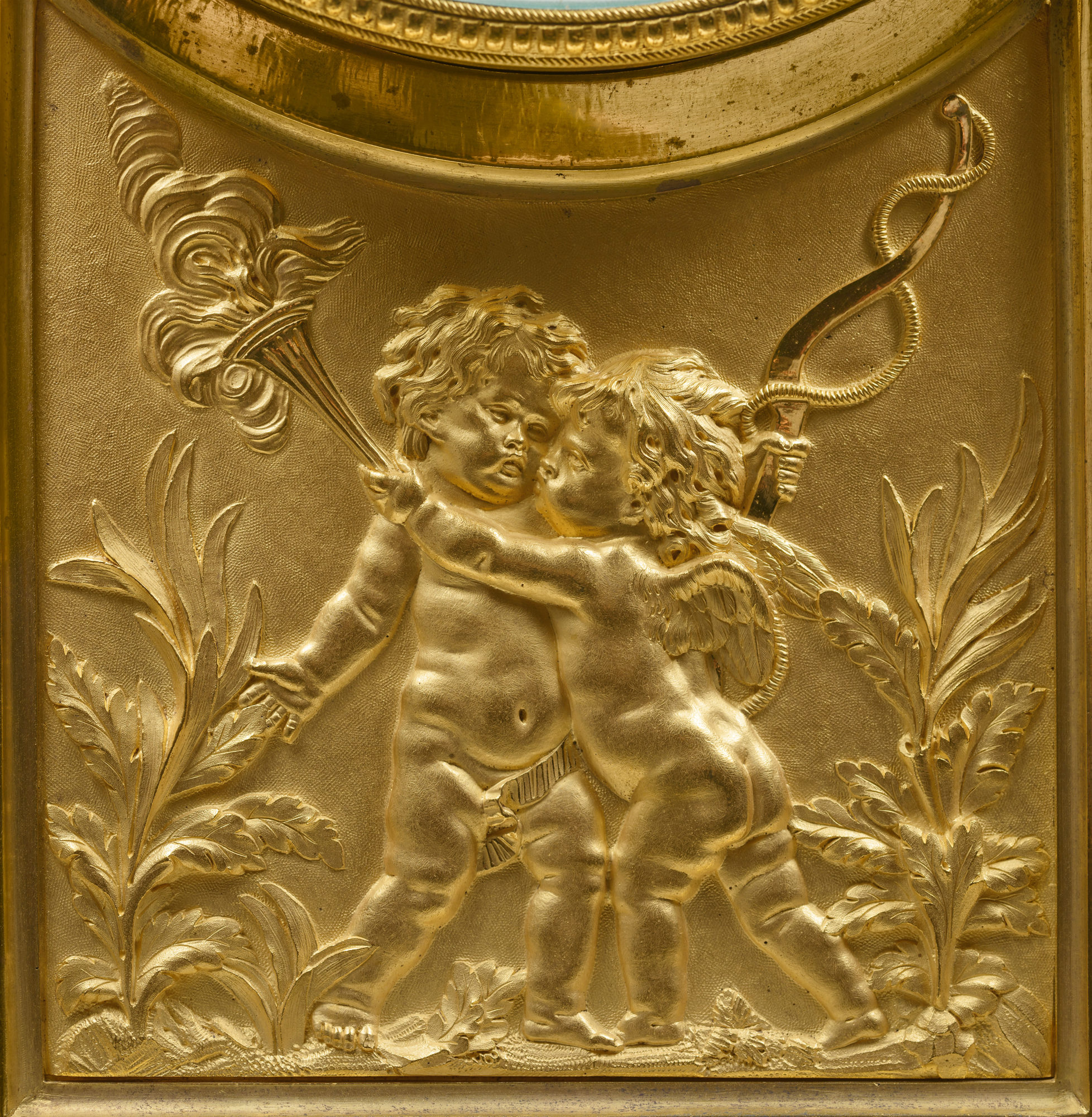
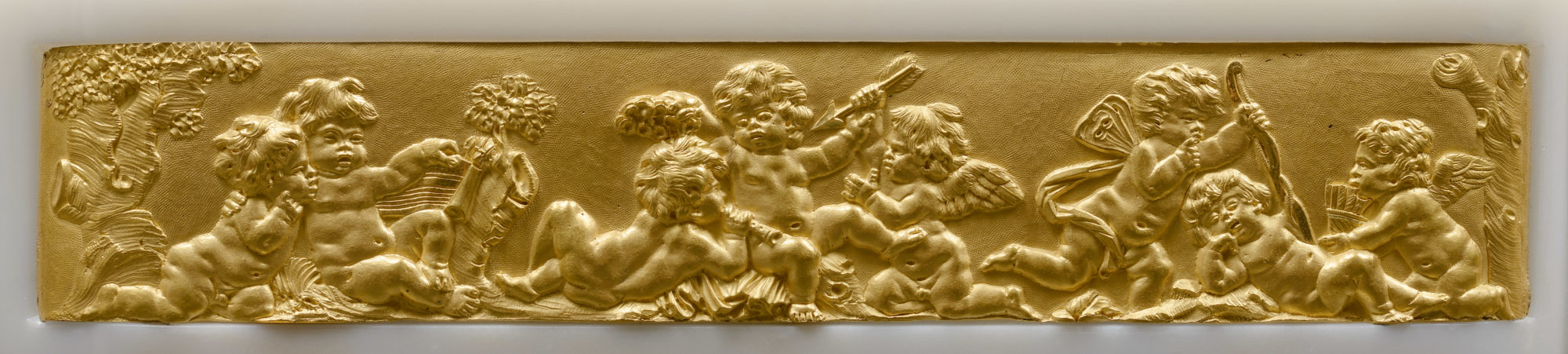
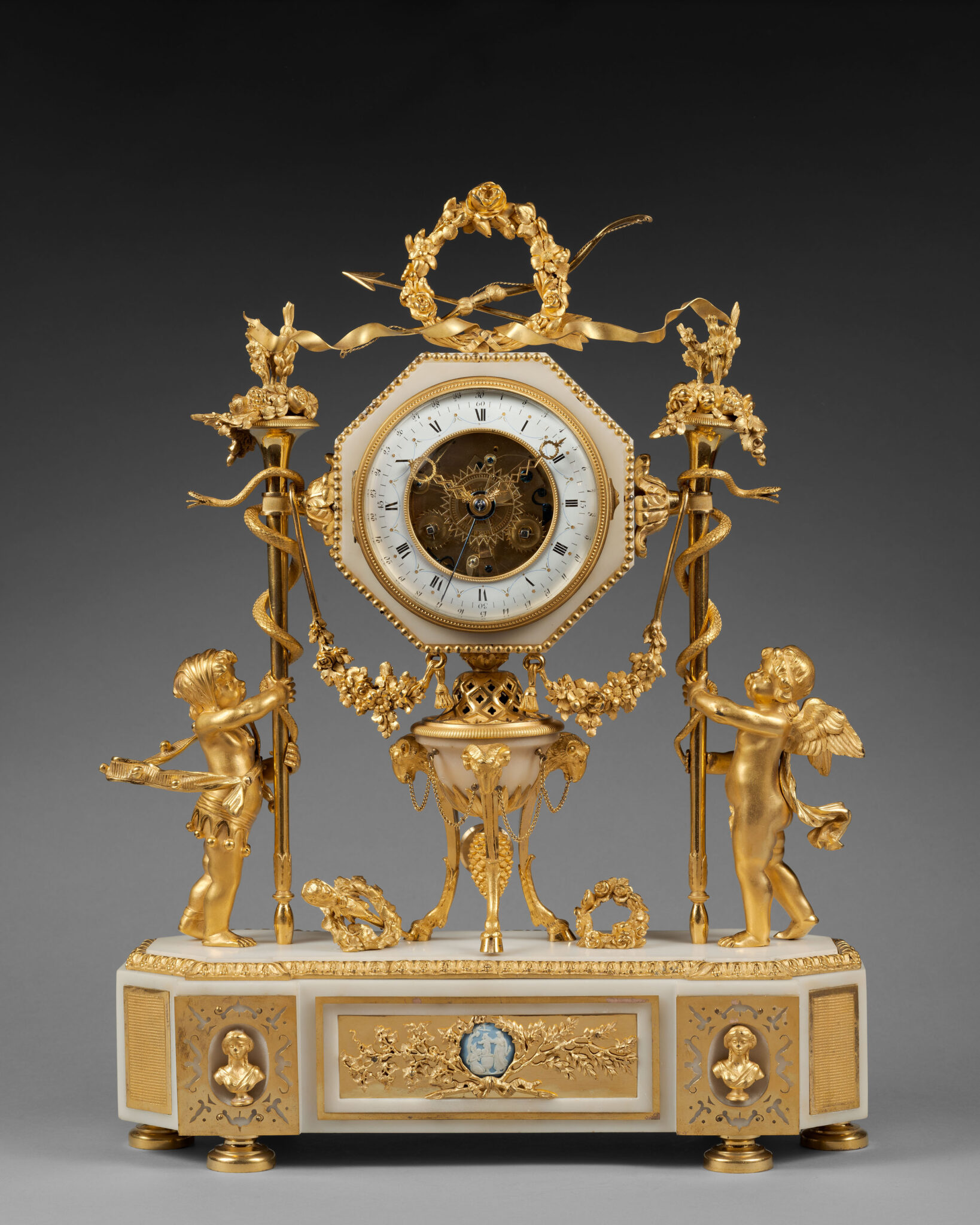
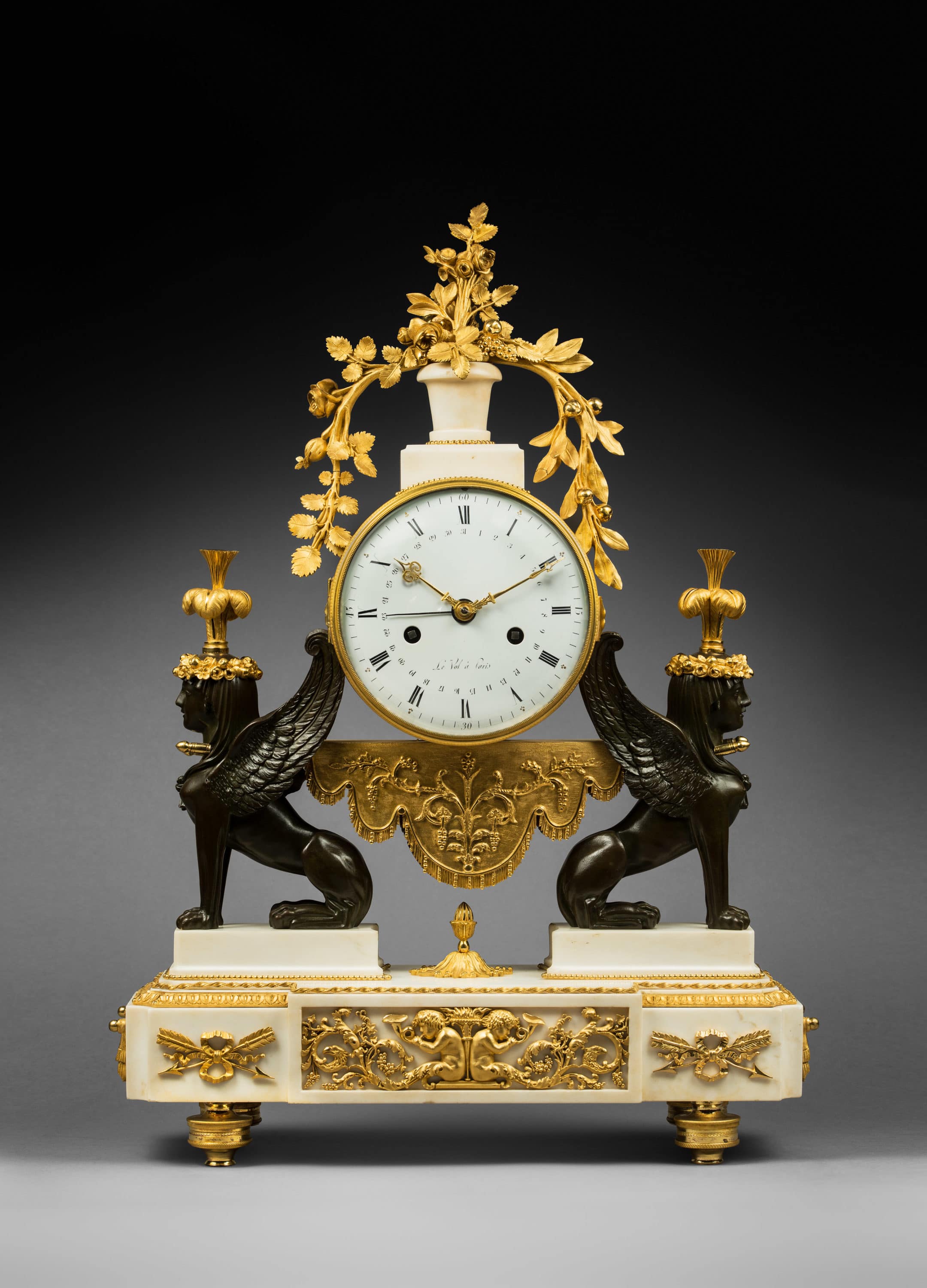
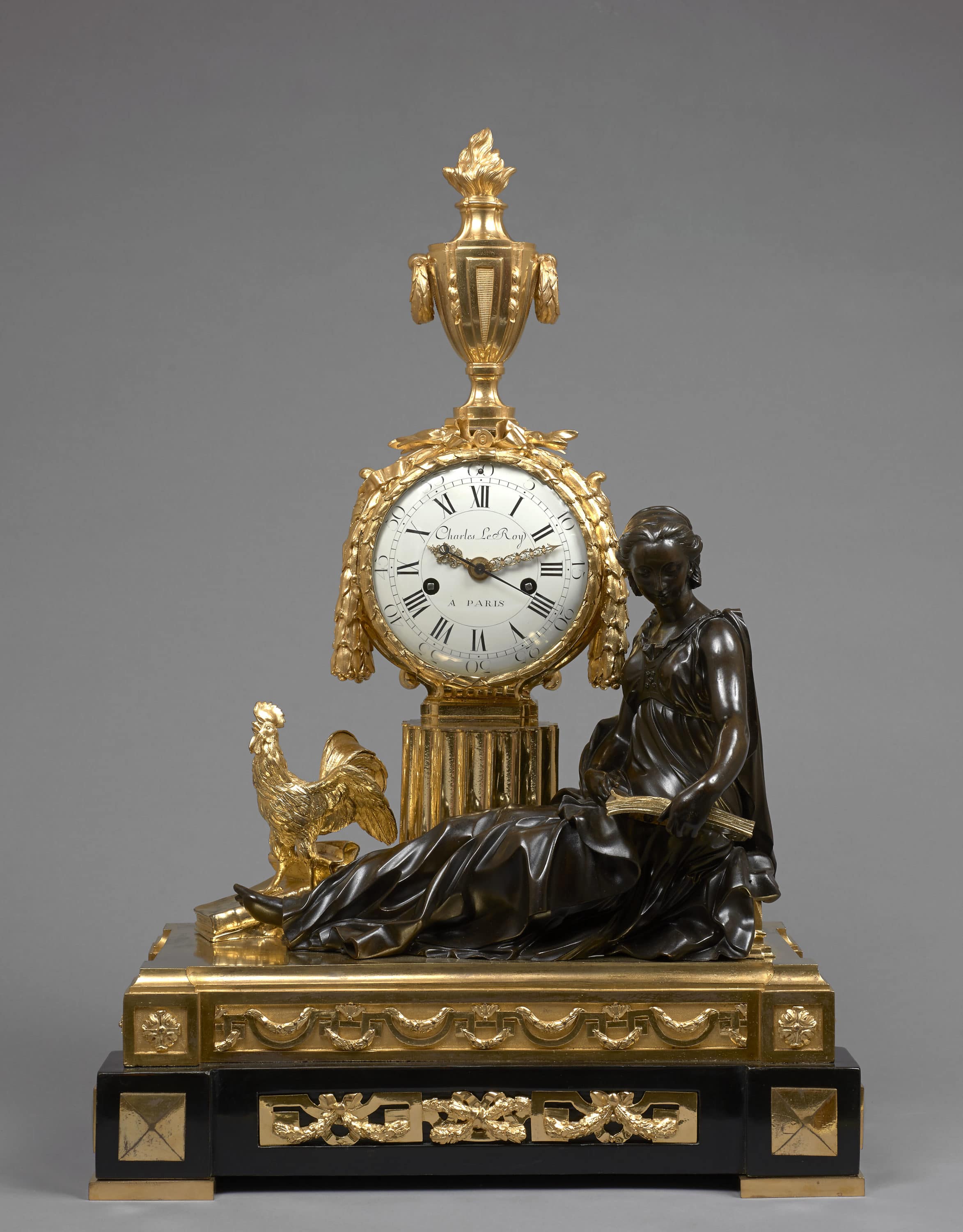
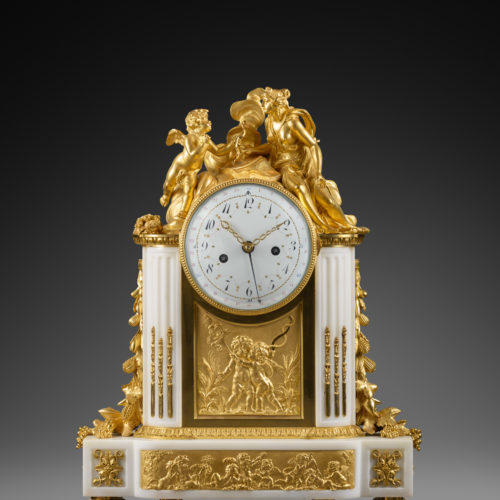
This clock’s architectural design and allegorical sculptural group testifies to the level of excellence attained by Parisian clockmakers and bronziers by the mid 18th century. It indicates the hours, minutes and the revolutionary date, and is set within a white statuary marble borne flanked by two fluted half-columns adorned with sprigs of leaves and fruits, with inlaid chased ormolu motifs centred by a low relief plaque depicting two embracing putti, one holding a bow and the other a flaming torch. The frieze on the white marble base depicts a landscape in which putti engage in various activities, flanked by ormolu quatrefoil mounts. At the clock’s summit, there is a sculptural group representing a young drapery-clad woman and a winged child holding a bow, sitting in the clouds. This is the allegory of Venus Teaching Cupid; the lesson is engraved in the open book that lies between them. The base rests on six chased toupie feet.
La Pendulerie is the specialist in fine and rare antique clocks, based in Paris.
This remarkably well-executed clock is of a type that was very rare during the 18th century. The case was obviously created during the Louis XVI period, very probably by the great bonze-caster François Rémond judging by the quality of the chiseling. The dial was surely the last element to be created for this clock: indeed, the 30 days on the dial attest that the Revolutionary Calendar was in use at the time of its creation.
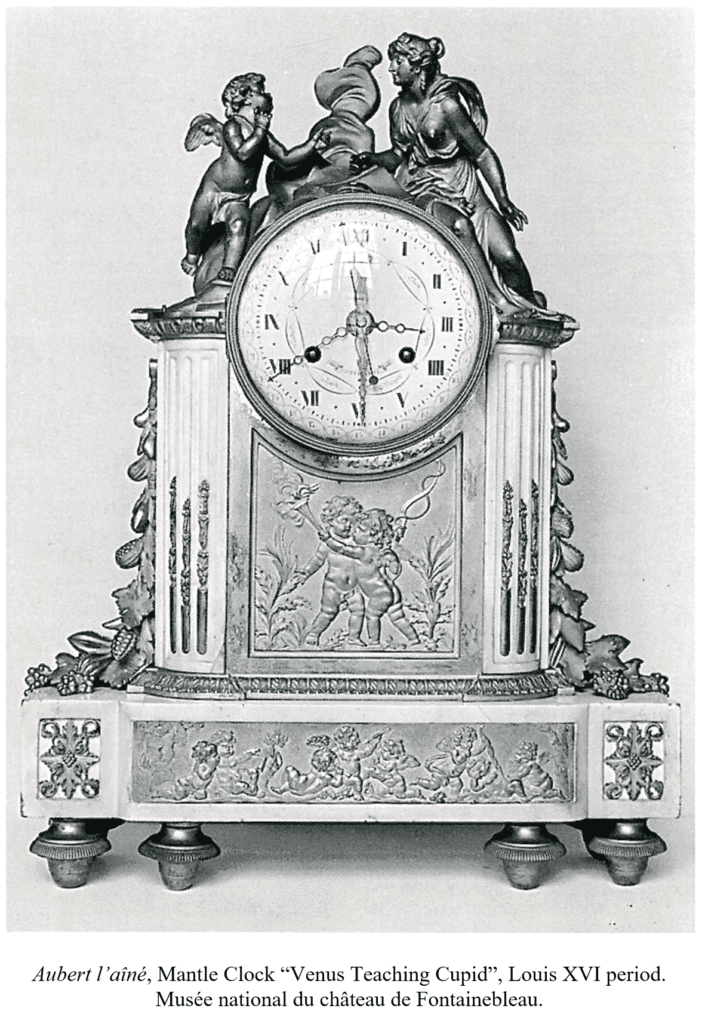
Among the identical examples, one notes: a clock from the bequest of Baron Basile de Schlichting and bearing the signature of the enameller Dubuisson, today in the Louvre Museum in Paris (illustrated in D. Alcouffe, A. Dion-Tenenbaum and G. Mabille, Les bronzes d’ameublement du Louvre, Dijon, 2004, p. 204, catalogue n° 103); a second, taken from the Paris home of General Moreau in 1804, bearing the signature of the clockmaker Aubert l’aîné, today in the Musée National du Château de Fontainebleau (illustrated in J-P. Samoyault, Musée national du château de Fontainebleau, Pendules et bronzes d’ameublement entrés sous le Premier Empire, RMN, Paris, 1989, p. 48, catalogue n° 3).
François Rémond was, along with Pierre Gouthière, one of the most important Parisian chaser-gilders of the last third of the 18th century. He began his apprenticeship in 1763 and became a master chaser-gilder in 1774. His great talent quickly won him a wealthy clientele, including certain members of the Court. Through the marchand-mercier Dominique Daguerre, François Rémond was involved in furnishing the homes of most of the important collectors of the late 18th century, supplying them with exceptional clock cases, firedogs, and candelabra. These elegant and innovative pieces greatly contributed to his fame.