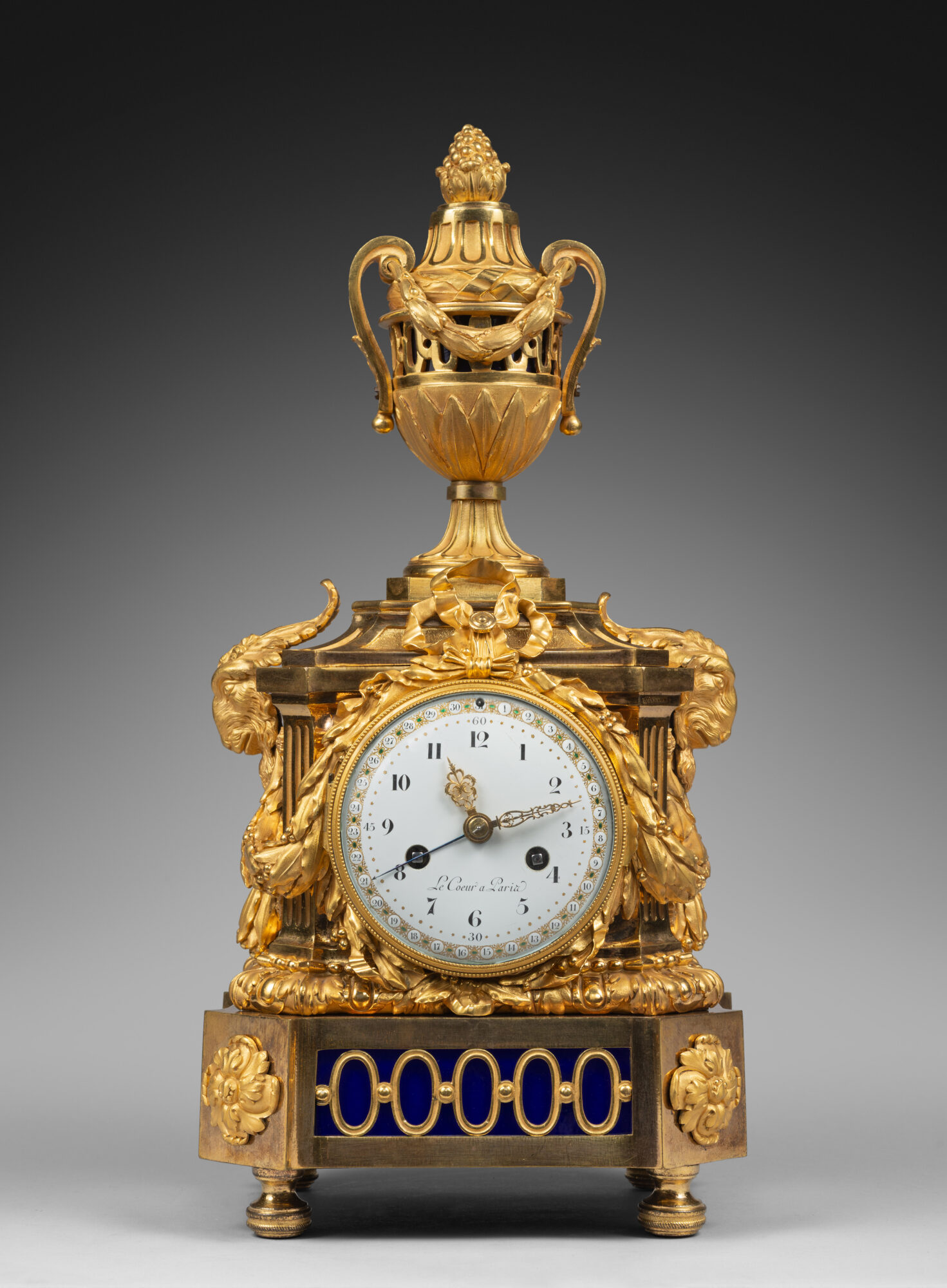
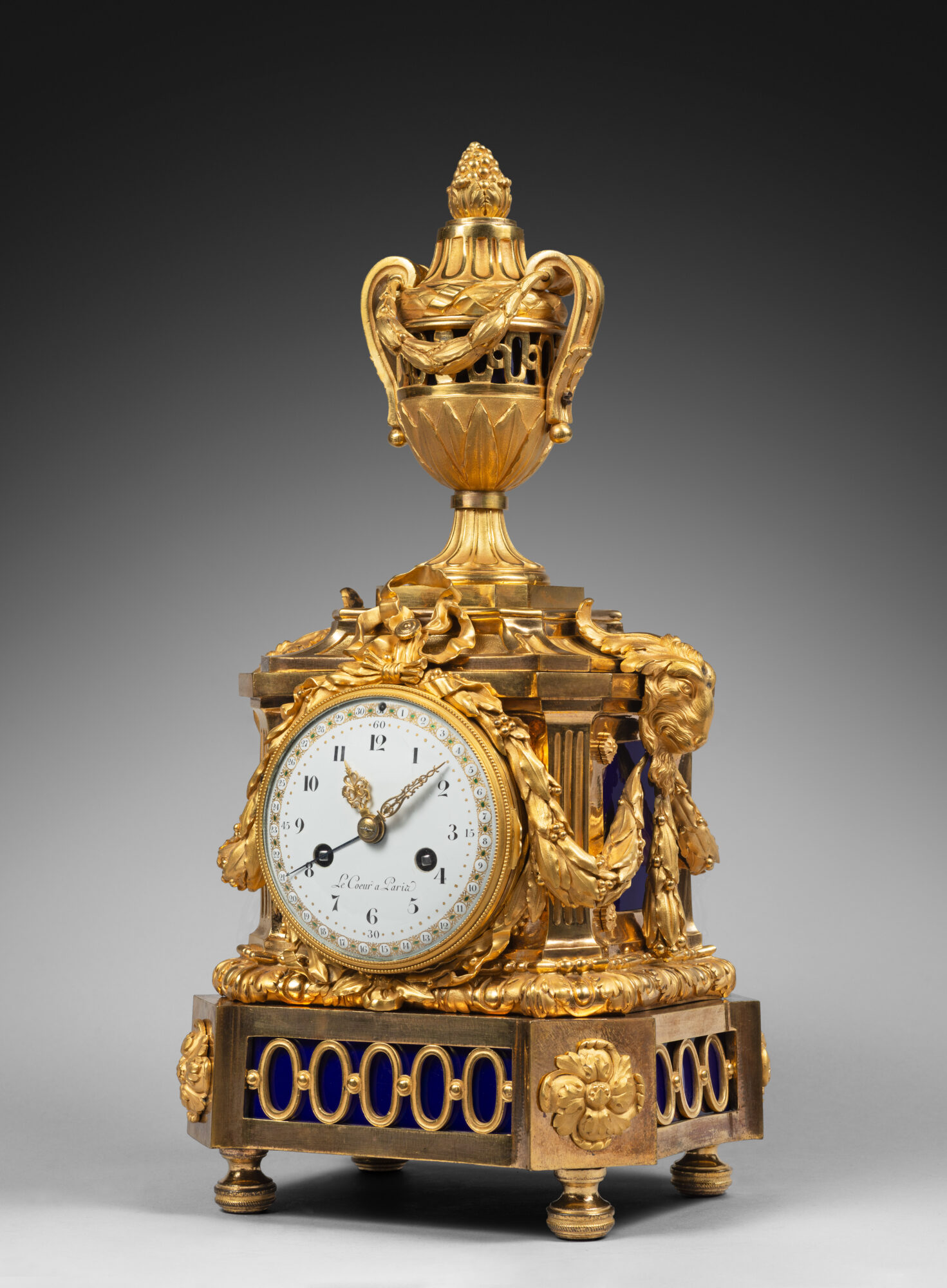
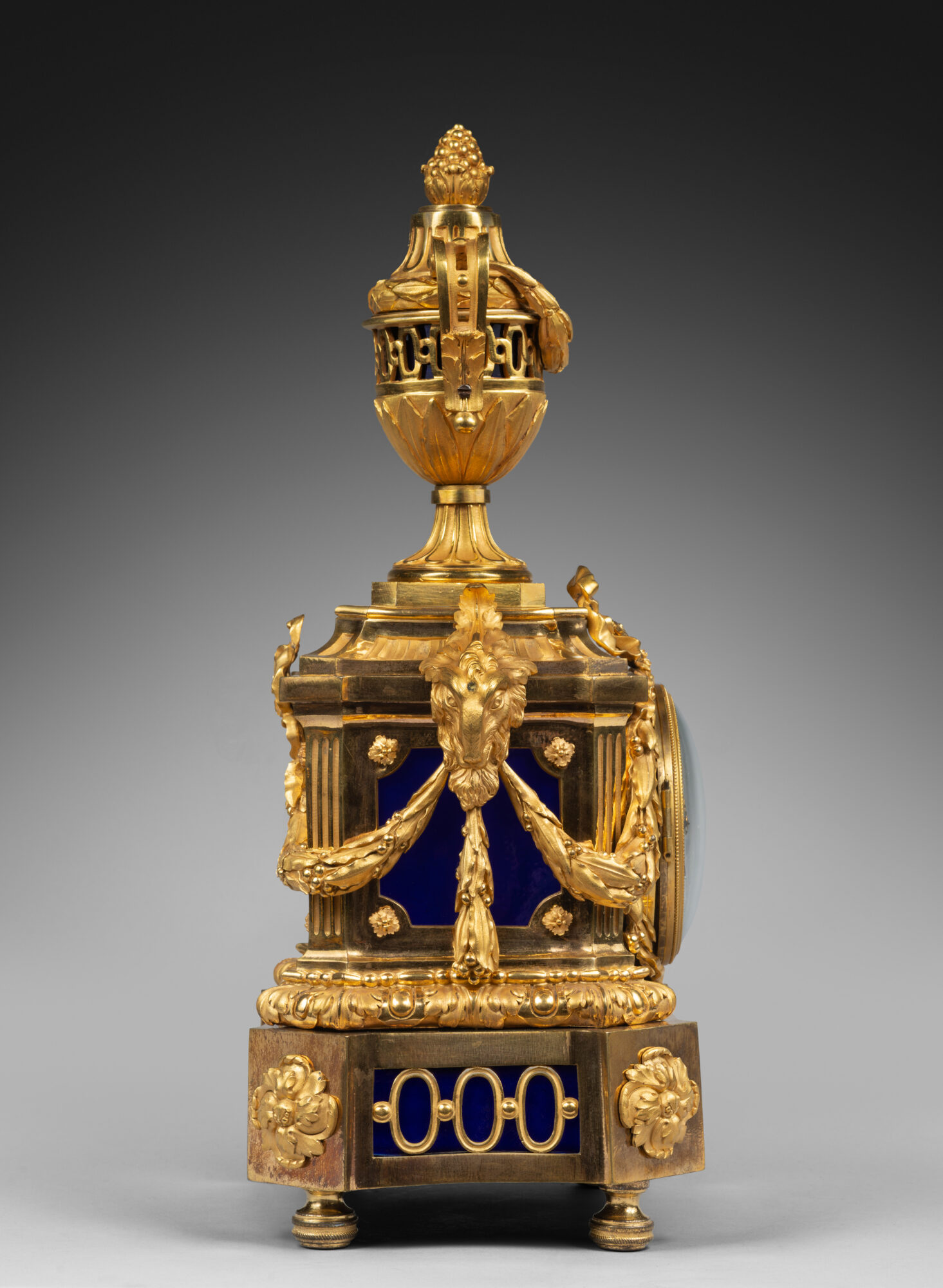
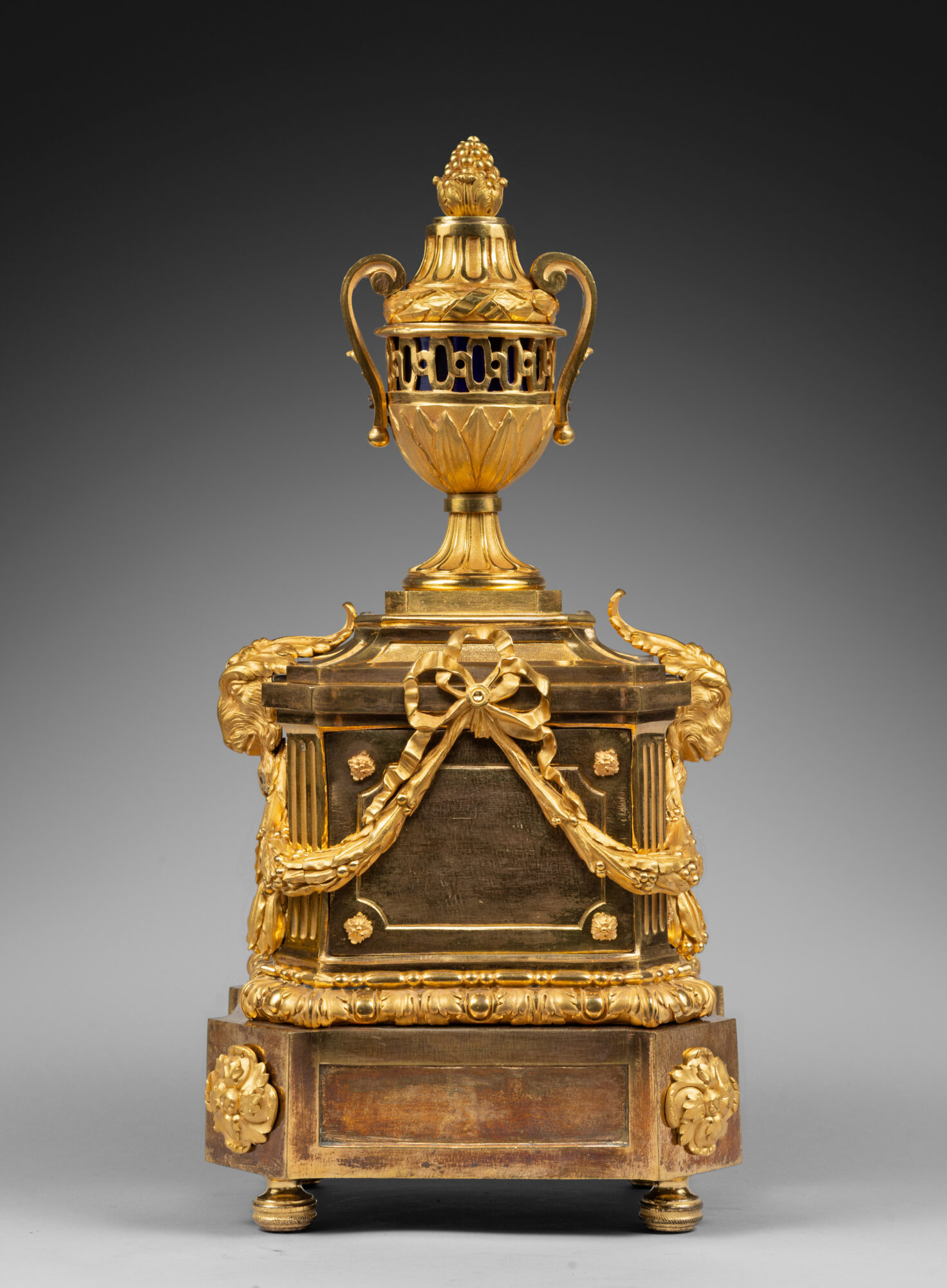
LeCœur
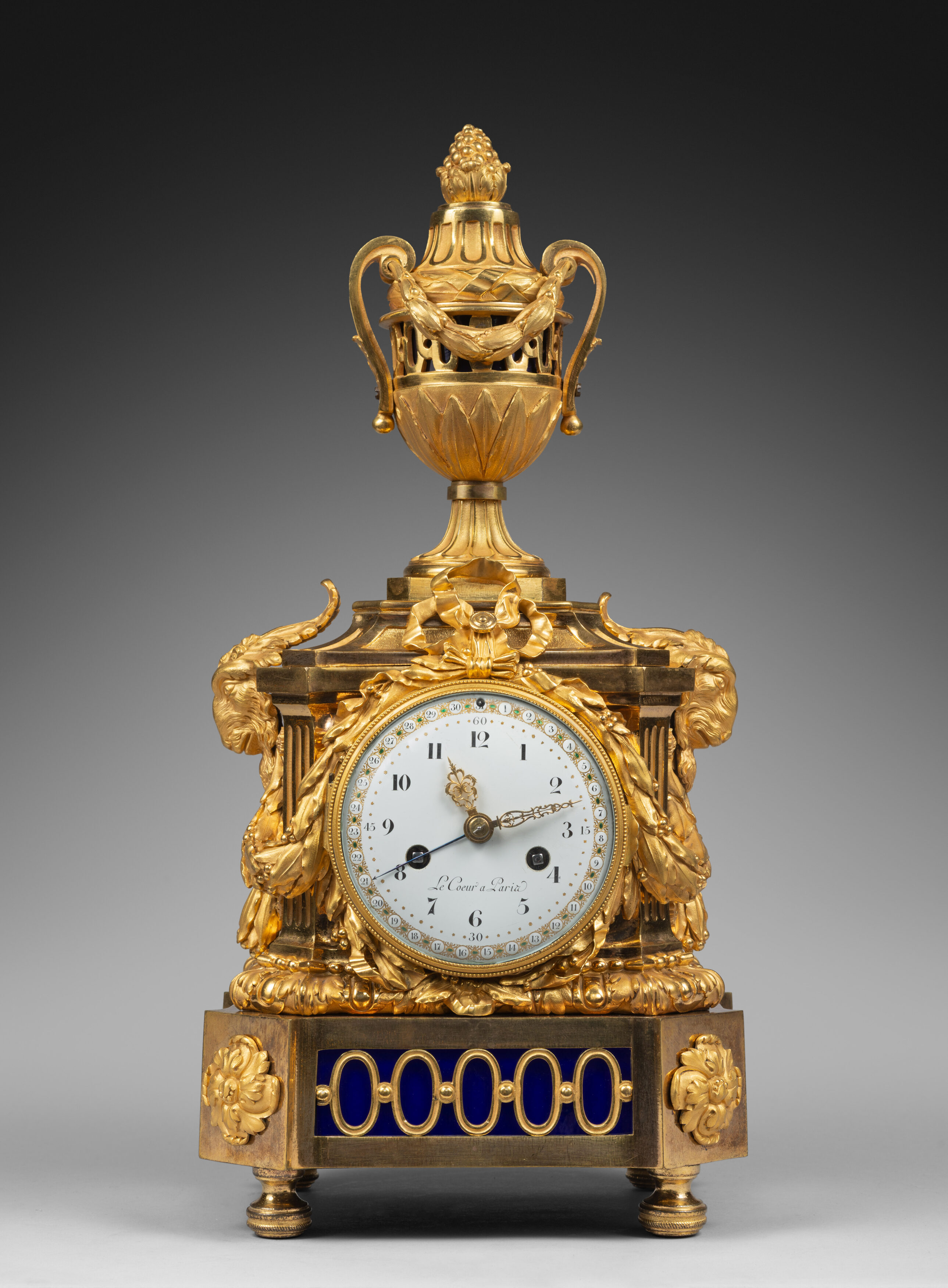
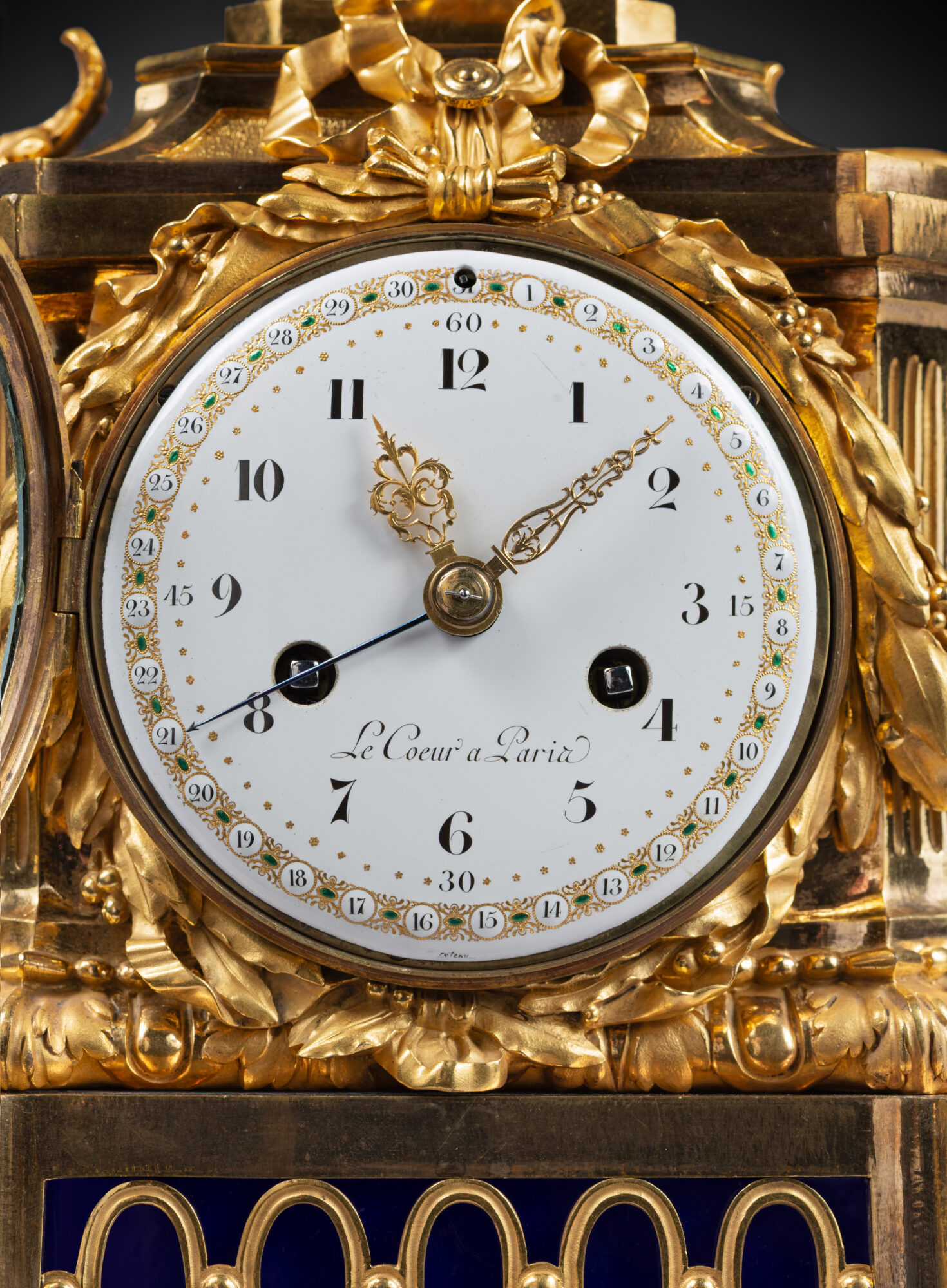
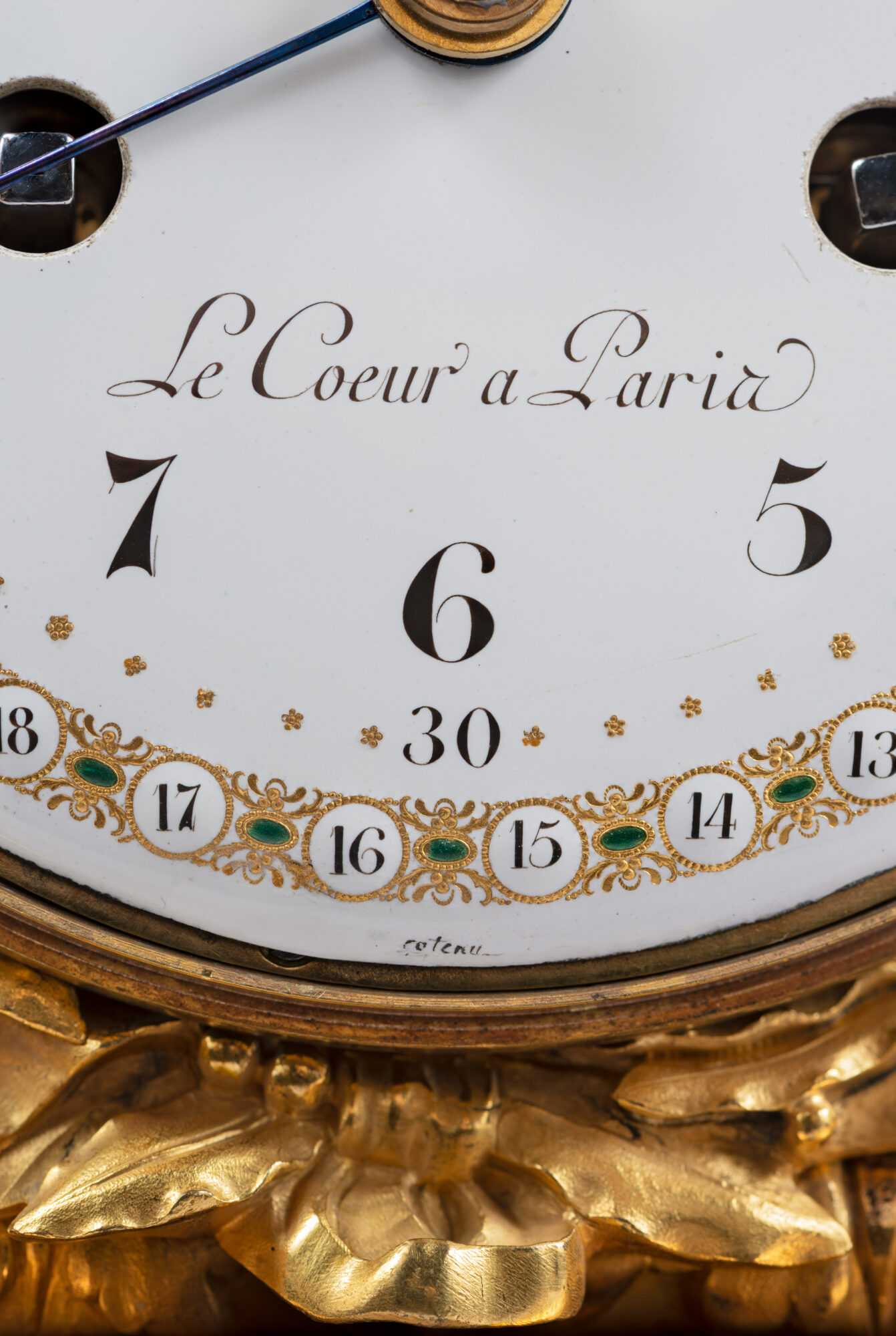
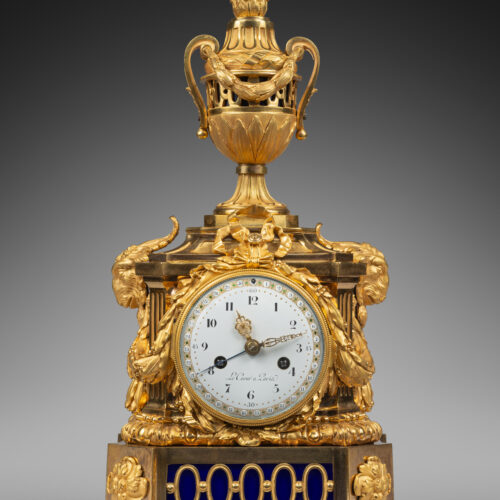
The signature “Le Coeur à Paris” is that of a Parisian horologer who was active from the latter part of the reign of Louis XVI until the early years of the following century. Tardy briefly mentions two clockmakers bearing that name (Dictionnaire des horlogers français, Paris, 1971, p. 359). It is possible that they may be brothers, one being called Edmé and the other “l’aîné” (“the elder”). They are mentioned in rue de la Verrerie in Paris in 1804. One notes that the Lecoeurs appear to have been very active; many clocks bearing their signature are mentioned as being in the homes of influential Parisian connoisseurs of the time, including Jeanne-Louise Chappuzeau de Bauge, the widow of Charles Lefebvre, Marquis Duquesnoy, and Marie-Philippe Donneau, Marquis de Vizé.
Joseph Coteau (1740 - 1801)
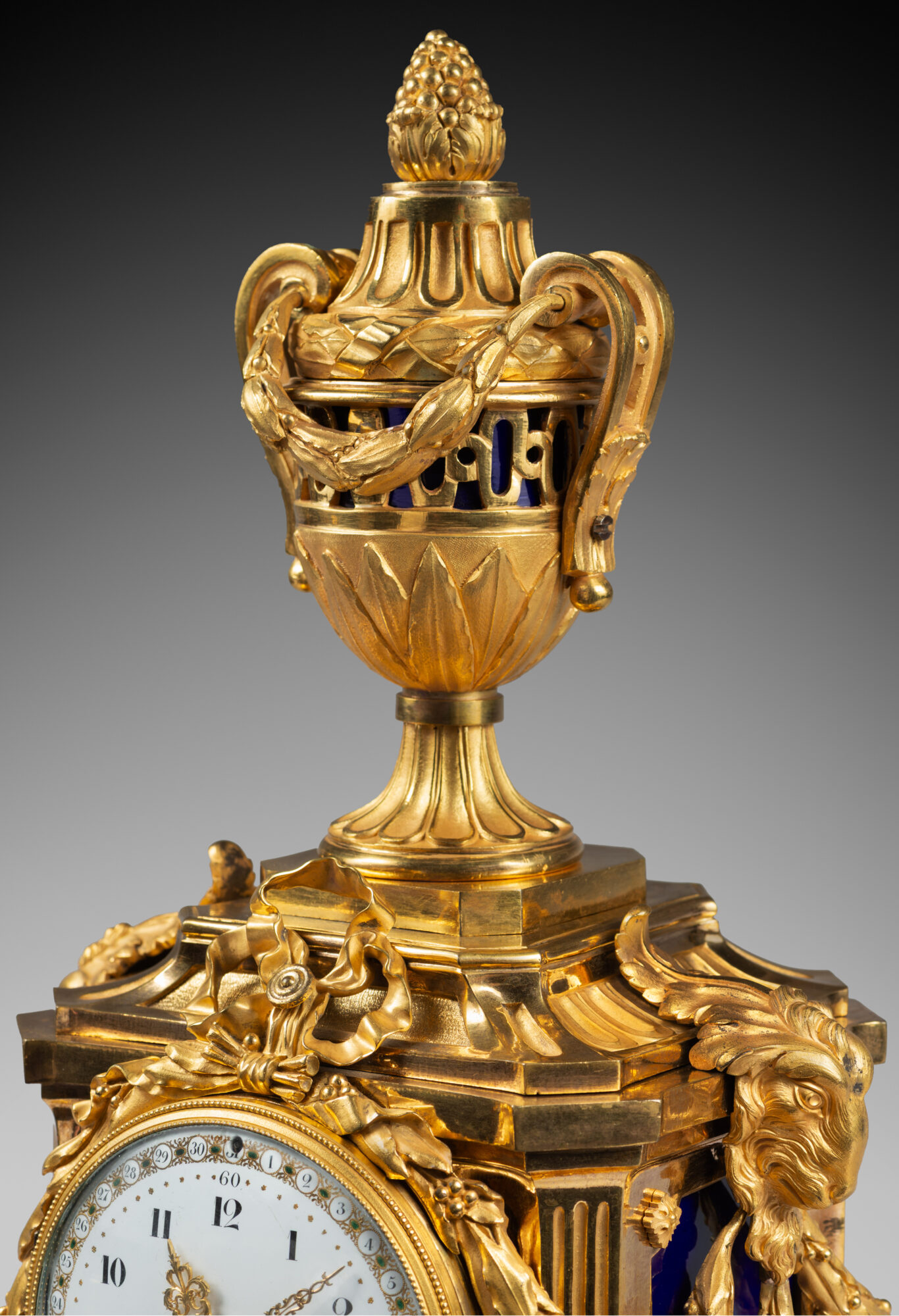
The most renowned enameller of his time, he worked with most of the best contemporary Parisian clockmakers. He was born in Geneva, where he was named master painter-enameler of the Académie de Saint Luc in 1766. Several years later he settled in Paris, and from 1772 to the end of his life, he was recorded in the rue Poupée. Coteau is known for a technique of relief enamel painting, which he perfected along with Parpette and which was used for certain Sèvres porcelain pieces, as well as for the dials of very fine clocks. Among the pieces that feature this distinctive décor are a covered bowl and tray in the Sèvres Musée national de la Céramique (Inv. SCC2011-4-2); a pair of “cannelés à guirlandes” vases in the Louvre Museum in Paris (see the exhibition catalogue Un défi au goût, 50 ans de création à la manufacture royale de Sèvres (1740-1793), Musée du Louvre, Paris, 1997, p. 108, catalogue n° 61); and a ewer and the “Comtesse du Nord” tray and bowl in the Pavlovsk Palace in Saint Petersburg (see M. Brunet and T. Préaud, Sèvres, Des origines à nos jours, Office du Livre, Fribourg, 1978, p. 207, fig. 250). A blue Sèvres porcelain lyre clock by Courieult, whose dial is signed “Coteau” and is dated “1785”, is in the Musée national du château in Versailles; it appears to be identical to the example mentioned in the 1787 inventory of Louis XVI’s apartments in Versailles (see Y. Gay and A. Lemaire, “Les pendules lyre”, in Bulletin de l’Association nationale des collectionneurs et amateurs d’Horlogerie ancienne, autumn 1993, n° 68, p. 32C).
Sèvres Royal Manufactory
The Vincennes porcelain factory was created in 1740 under the patronage of Louis XV and the Marquise of Pompadour. It was created to rival with the Meissen porcelain factory, and became its principal European rival. In 1756 it was transferred to Sèvres, becoming the Royal Sèvres porcelain factory. Still active today, during the course of its existence it has had several periods of extraordinary creativity and has called on the finest French and European artisans. Kings and emperors considered it an exemplary showcase for French know-how. Most of the pieces created in the manufactory workshops were intended to be given as diplomatic gifts or to decorate the castles and royal palaces of the 18th and 19th centuries.
Robert Osmond (1711 - 1789)
French bronze-caster Robert Osmond was born in Canisy, near Saint-Lô; he began his apprenticeship in the workshop of Louis Regnard, maître fondeur en terre et en sable, and became a master bronzier in Paris in 1746. He is recorded as working in the rue des Canettes in the St. Sulpice parish, moving to the rue de Mâcon in 1761. Robert Osmond became a juré, thus gaining a certain degree of protection of his creative rights. In 1753, he sent for his nephew in Normandy, and in 1761, the workshop, which by that time had grown considerably, moved to the rue de Macon. The nephew, Jean-Baptiste Osmond (1742-after 1790) became a master in 1764 and as of that date worked closely with his uncle, to such a degree that it is difficult to differentiate between the contributions of each. Robert appears to have retired around 1775. Jean-Baptiste, who remained in charge of the workshop after the retirement of his uncle, encountered difficulties and went bankrupt in 1784. Robert Osmond died in 1789.
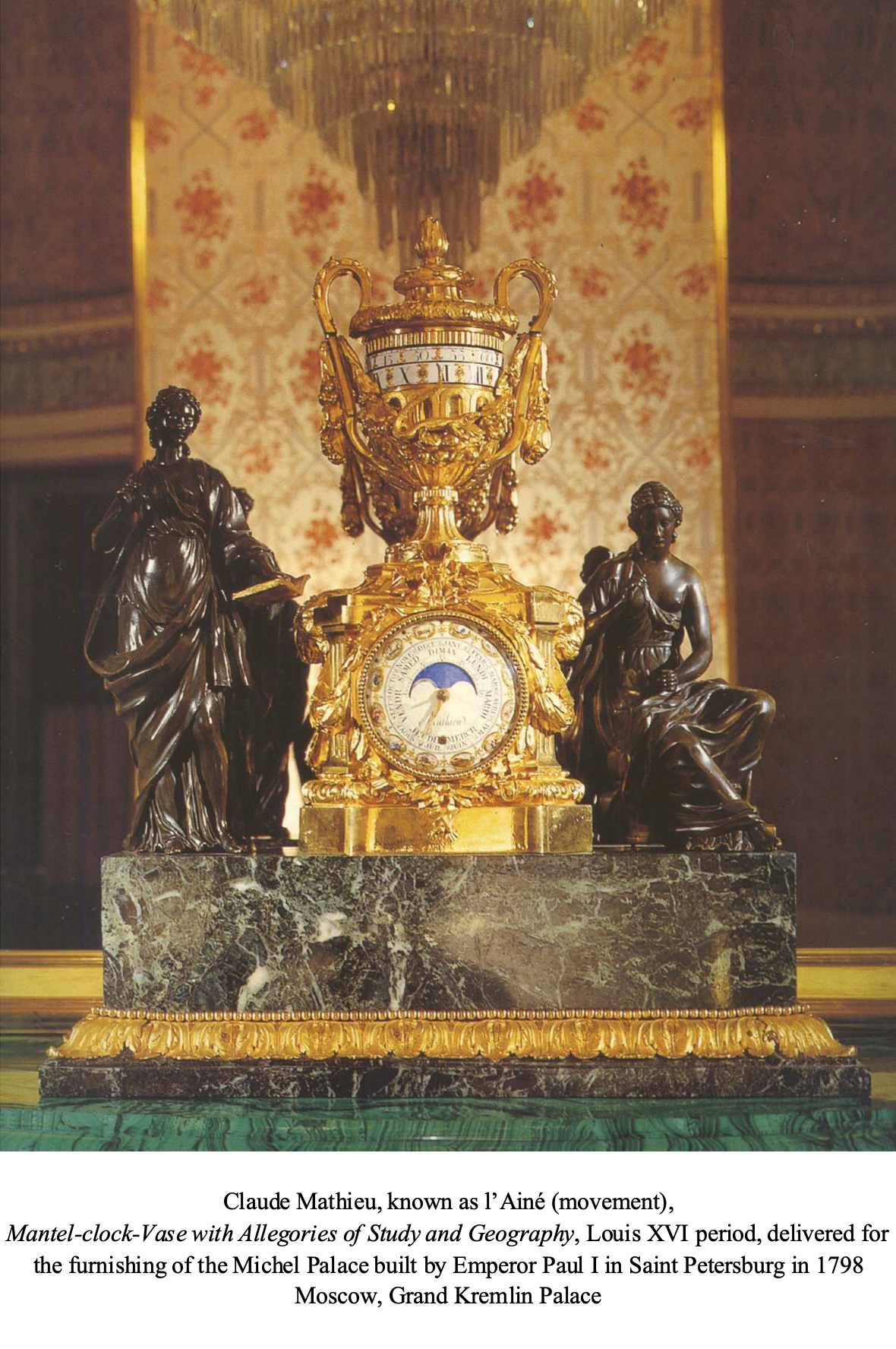
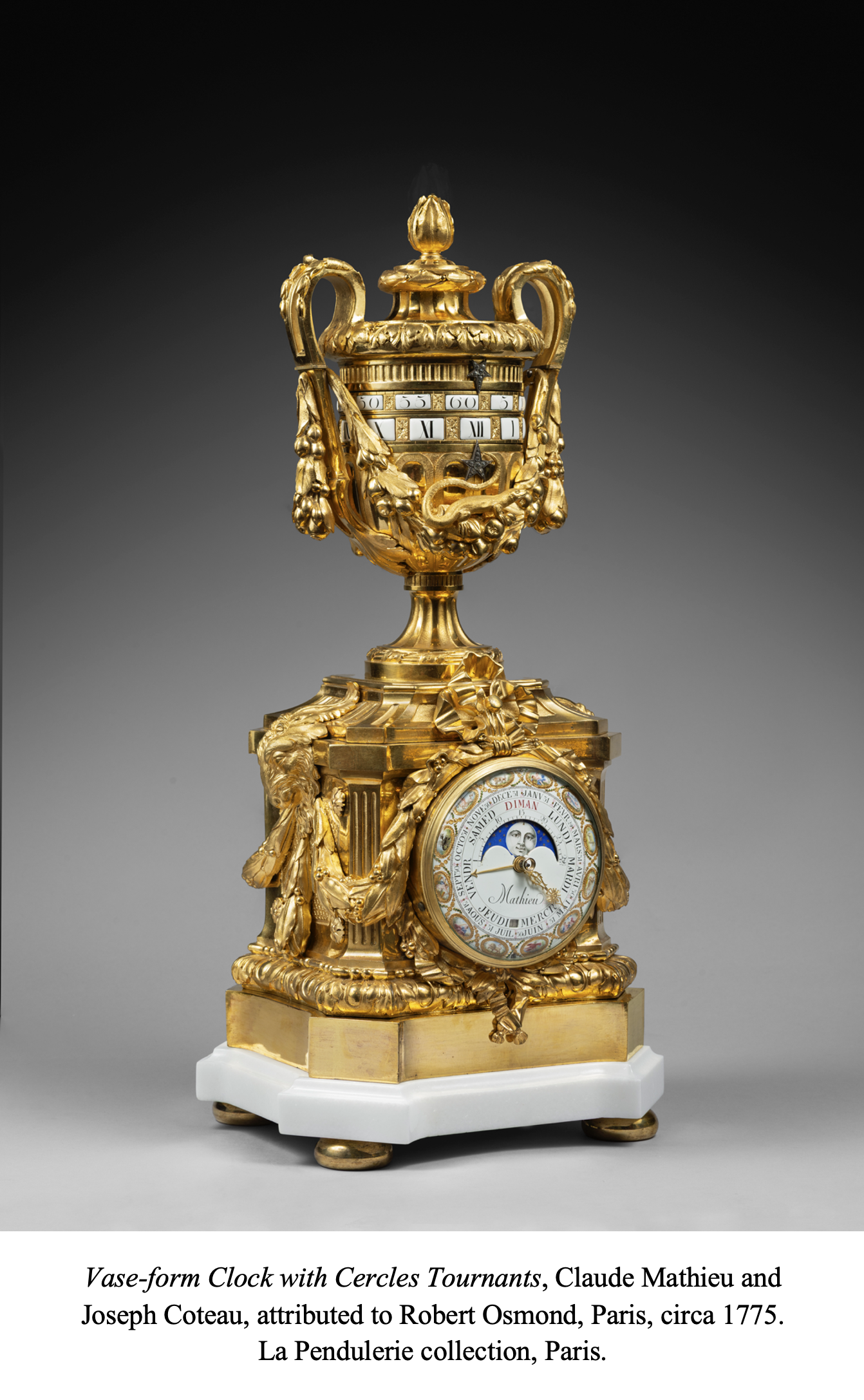
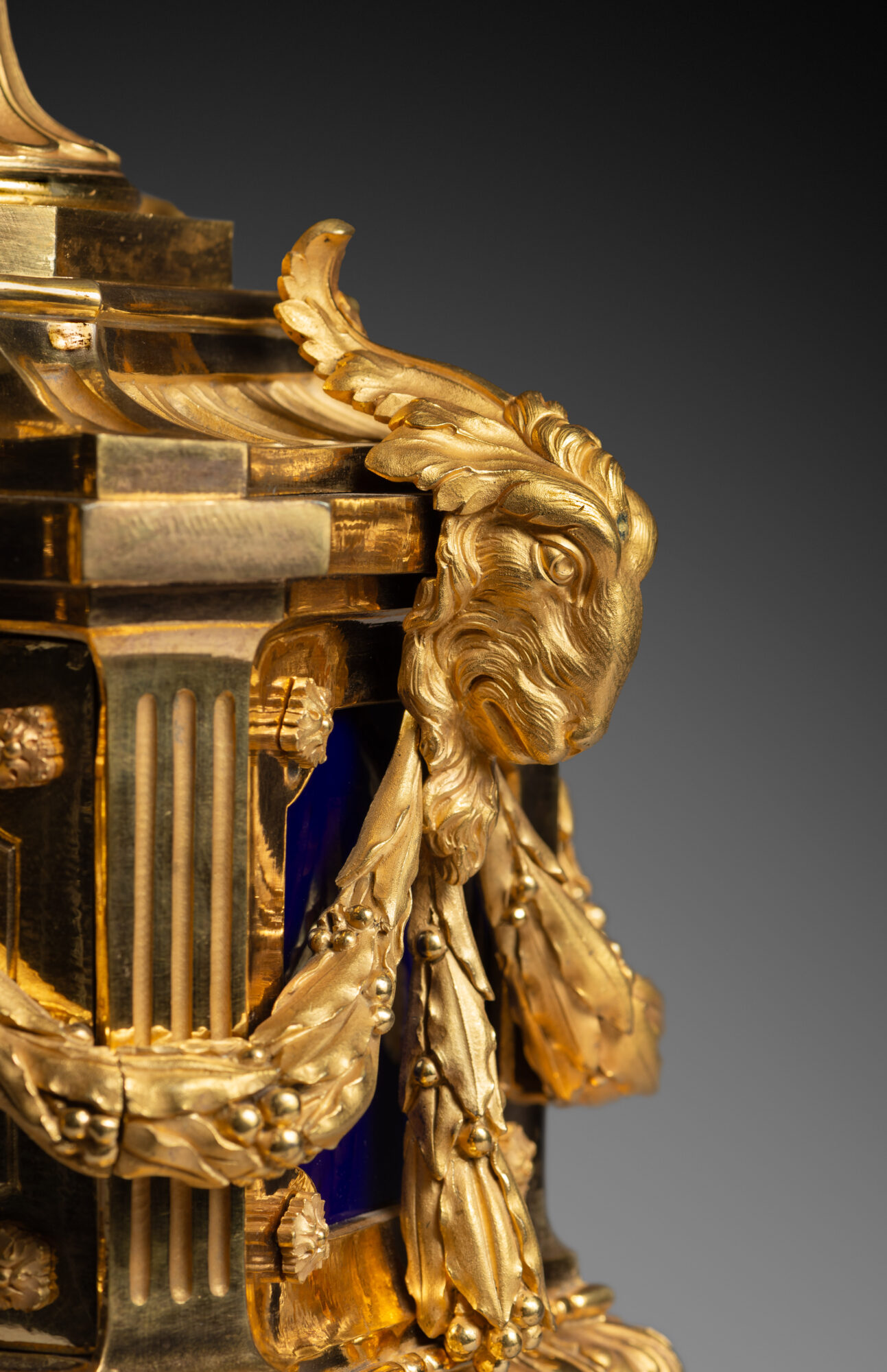
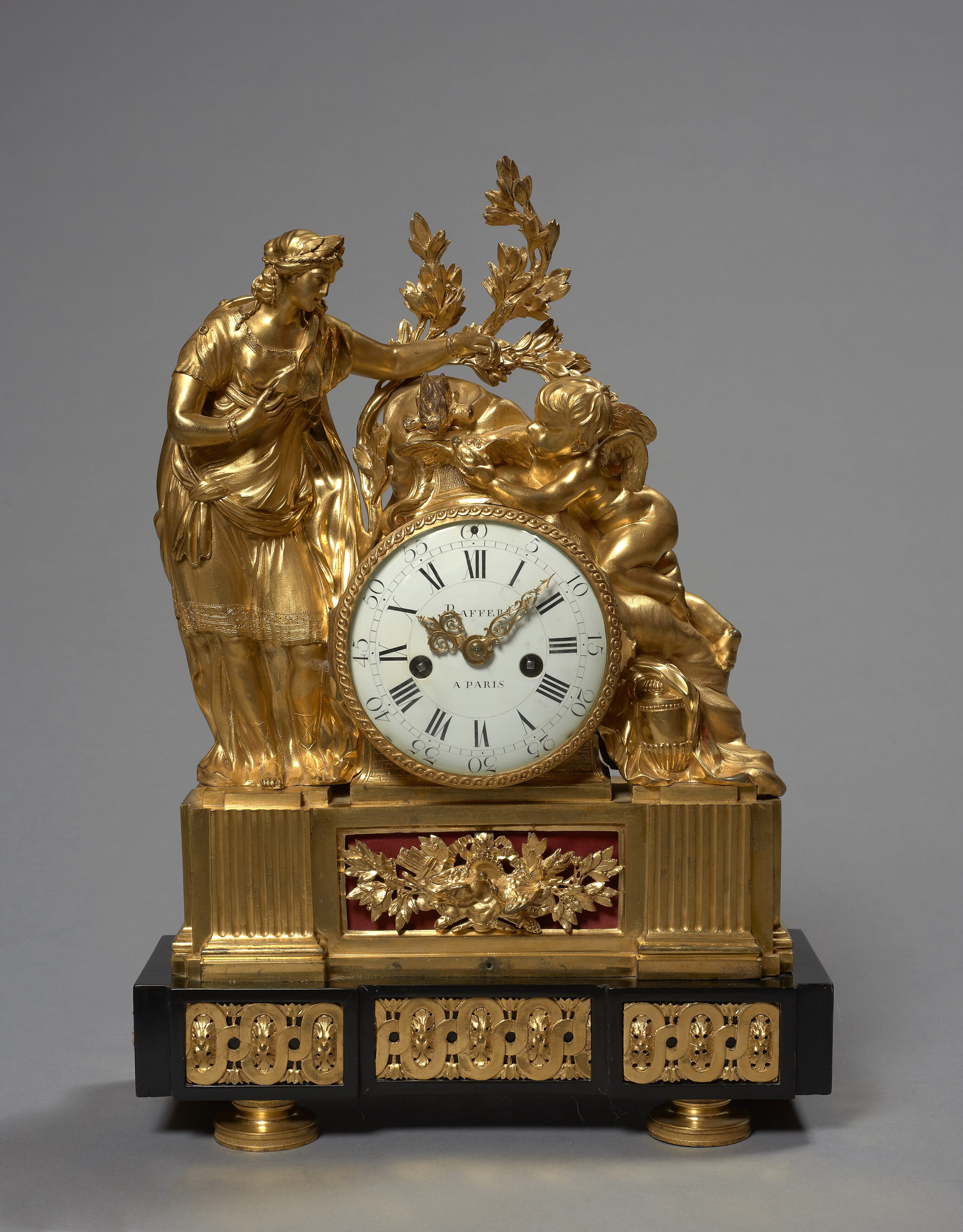
Prolific bronze casters and chasers, the Osmonds worked with equal success in both the Louis XV and the Neo-classical styles. Prized by connoisseurs of the period, their work was distributed by clockmakers and marchands-merciers. Although they made all types of furnishing objects, including fire dogs, wall lights and inkstands, the only extant works by them are clocks, including one depicting the Rape of Europe (Getty Museum, California) in the Louis XV style and two important Neo-classical forms, of which there are several examples, as well as a vase with lions’ heads (Musée Condé, Chantilly and the Cleveland Museum of Art) and a cartel-clock with chased ribbons (examples in the Stockholm Nationalmuseum; Paris, Nissim de Camondo Museum). A remarkable clock decorated with a globe, cupids and a Sèvres porcelain plaque (Paris, Louvre) is another of their notable works.
Specialising at first in the rocaille style, in the early 1760’s they turned to the new Neo-classical style and soon numbered among its greatest practitioners. They furnished cases to the best clockmakers of the period, such as Montjoye, for whom they made cases for cartonnier and column clocks, the column being one of the favourite motifs of the Osmond workshop.